

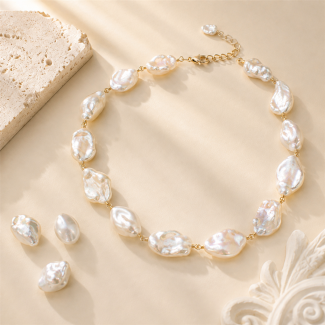
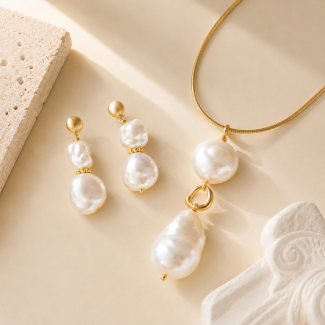
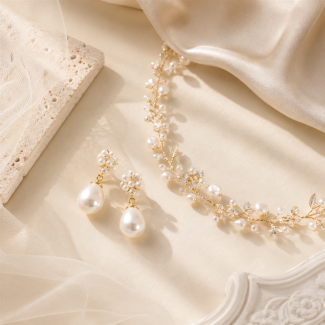
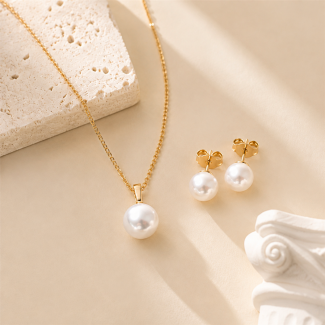
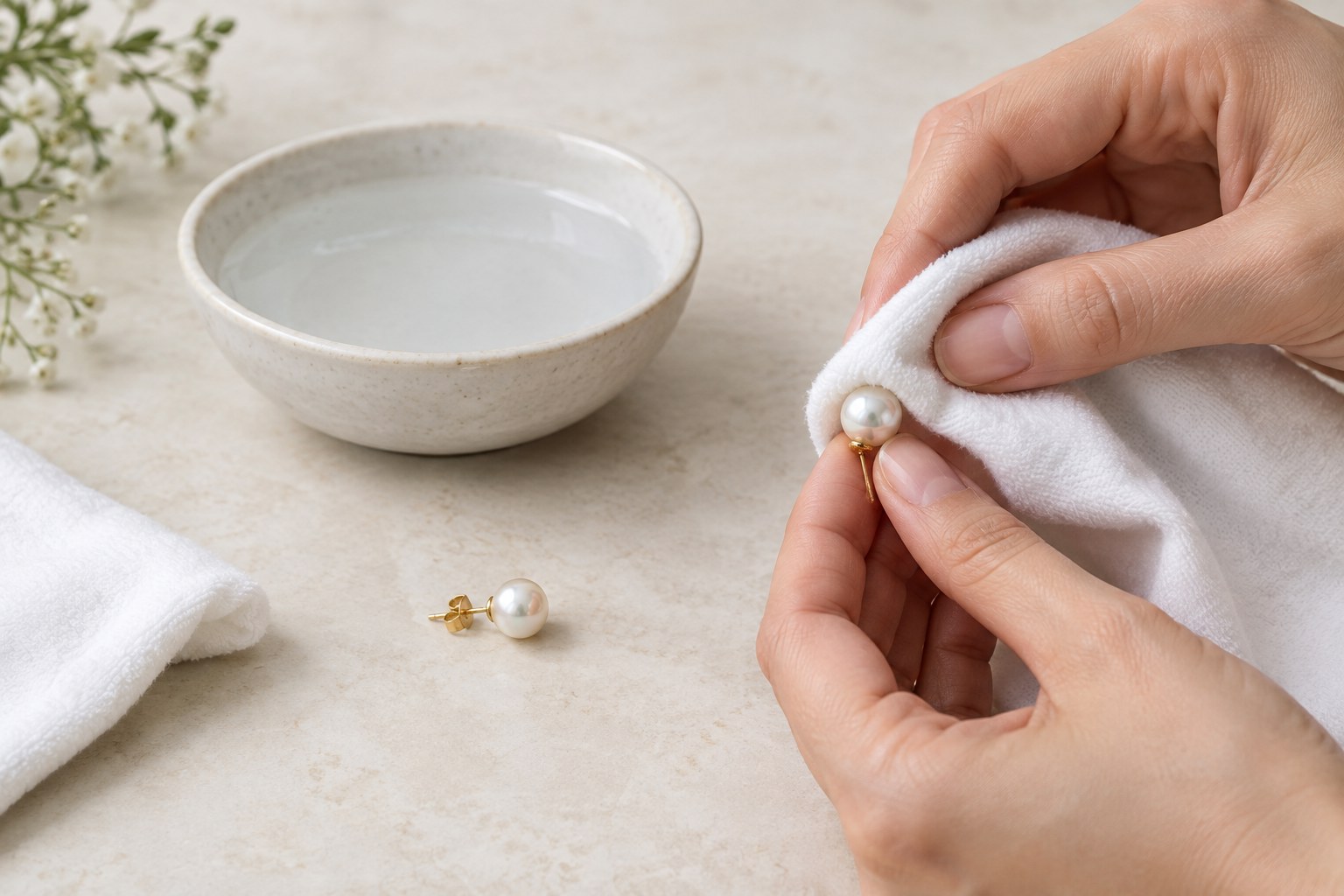
To clean pearls safely, use the least moisture and friction needed. Start with a clean, very soft cloth. For visible residue, lightly dampen the cloth with lukewarm water; if the piece’s construction allows it, add a tiny amount of mild soap. Wipe gently, remove any soap, and let the jewelry dry flat and completely.
Never use an ultrasonic cleaner, steam, acids, abrasives or harsh jewelry dips on pearls. Before cleaning, consider the whole piece—not only the pearls—because thread, adhesive, plating and other gemstones may be more sensitive to water or soap.
Choose the gentlest method that works
- After normal wear: use a dry, very soft cloth.
- For light visible residue: use a cloth lightly dampened with lukewarm water.
- For more persistent residue: use a tiny amount of mild soap only when the setting, thread and other materials allow it.
- For damaged, antique or unknown pieces: stop and ask a jeweler or pearl specialist.
Move to a wetter method only when the previous step is not enough. Pearls do not benefit from routine soaking or vigorous polishing.
What you need
- Two clean, very soft lint-free cloths
- A small bowl of lukewarm water
- A tiny amount of mild, fragrance-free soap, only if needed
- A clean towel for flat drying
- Good light for checking thread, drill holes and settings
A soft cloth is the main tool. Brushes, polishing pads, paper towels and textured fabrics can create unnecessary abrasion.
Before you begin: inspect the jewelry
Cleaning is not the first step if the piece is already damaged. Check for:
- Loose pearls or moving settings
- Frayed, stretched or discoloured thread
- Loose knots
- Cracks, peeling or heavy abrasion
- Adhesive that is visible around a setting
- A clasp, post or wire component that feels unstable
If you find a structural problem, set the piece aside for a jeweler. Moisture and handling can make a loose setting or weakened strand worse.
Also identify the other materials in the design. Porous gemstones, leather, fabric, glued elements and some finishes may not tolerate the same method. When the materials are unknown, use a dry cloth and seek professional advice rather than experimenting.
For routine care, use a dry wipe
Most pearl jewelry does not need washing after every wear. A gentle dry wipe removes light perspiration, skin oils and traces of cosmetics before they build up.
- Wash and dry your hands.
- Place the jewelry on a clean towel.
- Support the piece so you are not pulling on thread or findings.
- Wipe each pearl lightly with a soft cloth.
- Check the metal parts and clasp as you go.
Do not scrub or try to polish away natural surface features. Small ridges, dimples and variations may be part of the pearl’s growth rather than removable dirt.
How to clean pearls with a damp cloth
Use this method when a dry wipe does not remove visible residue.
- Prepare lukewarm water. Avoid hot or very cold water.
- Dampen—not saturate—a soft cloth. Wring it out thoroughly.
- Wipe the pearls gently. Use light passes rather than rubbing one spot repeatedly.
- Clean around findings carefully. Do not force moisture into drill holes, glued cups or closed settings.
- Remove remaining moisture. Blot with a second clean cloth.
- Dry the jewelry flat. Place it on a clean towel in a well-ventilated area away from direct sun or heat.
- Wait until it is completely dry. This is especially important for strung jewelry.
Do not wear a damp strand. Thread can stretch while wet, and moisture may remain around drill holes after the pearl surfaces feel dry.
When is mild soap appropriate?
For occasional, more thorough cleaning, the GIA pearl care guide advises that warm, soapy water can be safe. For finished jewelry, the key is moderation and the construction of the piece: thread, adhesive, plating and other stones may introduce additional limits.
Add only a tiny amount of mild soap to lukewarm water. Dampen a cloth with the diluted solution and wipe the pearls gently. Follow with a separate cloth dampened with plain water so no soap film remains, then dry flat.
Avoid fragranced, antibacterial, degreasing or exfoliating formulas. If the piece is antique, glued, heavily strung, fragile or made with unknown materials, do not proceed without professional advice.
Should pearls be soaked?
Do not soak finished pearl jewelry. The pearl itself may tolerate brief contact with water during careful cleaning, but prolonged immersion can affect thread, knots, adhesives, plating and enclosed settings. Soaking also allows water and soap to settle near drill holes.
This is why “pearls can be cleaned with water” and “do not shower or swim in pearls” are not contradictory. Controlled, brief cleaning is different from repeated or prolonged exposure. For showering, swimming and accidental soaking, read what happens when pearls get wet.
How to clean a pearl necklace or bracelet
Lay the strand flat before you begin. Work section by section while supporting the thread, and avoid pulling the strand through a tightly closed cloth.
Pay attention to the areas near the clasp, where cosmetics and handling residue often collect. Use minimal moisture and never submerge the piece. After cleaning, reshape the strand into a relaxed line or curve and allow it to dry flat. Hanging a wet strand can place extra tension on the thread.
Once dry, check for new gaps, stretching or fuzziness. If the thread looks weak, have the strand inspected before wearing it again.
How to clean pearl earrings or glued pieces
Hold earrings by the metal finding rather than twisting the pearl. Wipe the pearl surface with a barely damp cloth and keep moisture away from the join between the pearl and its cup or post.
If the pearl moves, do not continue cleaning and do not add household glue. A jeweler can remove old adhesive, assess the fit and reset the pearl correctly.
What not to use on pearls
- Ultrasonic cleaners: vibration is not suitable for pearls and may loosen settings or damage treated surfaces.
- Steam cleaners: heat can harm pearls and adhesives.
- Vinegar or lemon juice: acids can attack pearl material.
- Baking soda or toothpaste: abrasive particles can scratch the surface.
- Bleach, ammonia or alcohol-based cleaners: harsh chemicals can damage pearls and other components.
- Metal polish or silver dip: products made for metal should not touch pearls.
- Stiff brushes: bristles can abrade the surface and catch thread.
- Hot water or a hairdryer: high heat can damage the pearl or construction.
Can yellowed pearls be cleaned white again?
Not every colour change is surface dirt. Yellowing can relate to age, dehydration, treatment changes, accumulated residue or alterations in the pearl material. Aggressive home cleaning may make the problem worse and cannot reliably restore the original appearance.
Begin with a gentle dry or damp-cloth clean. If the colour remains and the piece is valuable or sentimental, consult a jeweler or pearl specialist. Avoid bleaching or attempting to polish away the surface.
When to choose professional cleaning
Professional help is the safer option when:
- The piece is antique, valuable or highly sentimental.
- The pearls are combined with unknown or delicate materials.
- The strand needs restringing.
- A setting, post or glued pearl is loose.
- You see cracks, peeling or significant surface damage.
- Home cleaning does not remove the residue.
Tell the jeweler that the piece contains pearls and ask what method they plan to use. Pearl jewelry should not be placed automatically into the same cleaning equipment used for harder gemstones.
After cleaning
Once the piece is completely dry, place it in a soft pouch or a separate fabric-lined compartment. Keep harder gemstones, metal edges and earring posts from rubbing against the pearls. Store strands flat rather than hanging them.
For the complete day-to-day routine, read how to care for pearl jewelry. For pouches, compartments and travel, see how to store pearls properly.
For related guidance on wearing, water exposure and storage, visit our jewelry care library.
Frequently asked questions
Can I use a silver polishing cloth on pearls?
Not on the pearl surface. Some metal-polishing cloths contain compounds or abrasives intended to remove tarnish, and they may mark or dull pearls. If metal parts need polishing, keep the product away from the pearls or ask a jeweler to clean the piece.
How should I clean metal next to a pearl?
Use a barely damp soft cloth and work carefully around the setting. Do not apply metal dip, polish or concentrated cleaner where it can touch the pearl, thread or adhesive. Stubborn tarnish close to a pearl is better handled professionally.
What if makeup has dried on the pearl?
Hold a lightly dampened soft cloth against the residue for a few moments, then wipe with almost no pressure. Repeat gently rather than scraping. If the mark remains, stop before abrading the surface and consult a jeweler.
Should vintage pearls be cleaned the same way?
Not automatically. Older pieces may have weakened thread, fragile adhesive, worn nacre or unknown treatments. Begin with a dry cloth and seek professional advice before adding moisture.
Should pearls be cleaned before storage?
Wipe them after wear so perspiration and cosmetics are not stored against the surface. If you use any moisture, allow the entire piece to dry completely before placing it in a pouch or case.